
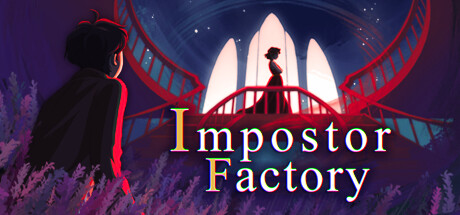
Reviewing the Use of RPG Maker in Impostor Factory
Originally released in 2021, Impostor Factory is the third and final game in the Sigmund Corp. Series which also includes To the Moon and Finding Paradise. Though the previous games in the series follow doctors who can wander through their patients’ minds, Impostor Factory is categorized as an adventure video game where players are tasked with solving a murder mystery. In particular, the game makes great use of RPG Maker and its features to allow players to experience different timelines and uncover details regarding the story. This review will provide a brief analysis of these design choices in order to assess the benefits of using RPG Maker when developing serious video games like The Road Ahead.
To begin, when looking at the overall design of the game, RPG Maker is used in a very strategic way to indicate differences in timelines to the audience. When Quincy, the main protagonist, enters a timeline set in the past, the developers make his character slightly translucent in order to indicate to the audience that this is different to the present day. On top of that, the developers use RPG Maker’s features to constantly present some of Quincy’s internal thoughts to the audience. These thoughts are differentiated with brackets to clarify what is being said out loud vs. internally. When looking at our development of The Road Ahead, this inner dialogue can be greatly helpful in ensuring players aren’t overwhelmed with too much information at the end of a memory. Having small bits of the characters’ internal thoughts expressed throughout the story will ensure that the audience is picking up on serious themes without taking away from the plot and the overall experience of the video game.
The only downside to this great use of RPG Maker when developing a game is that it can potentially be too text-based. Audiences may feel inclined to skip over bits of conversation if they find themselves to be reading constantly. Moreover, when looking at Quincy in the different timelines and memories of Impostor Factory, it is hard to differentiate whether he is purely witnessing them as a third-person or if he experiences them in a first-person perspective. It may be more effective for audiences to grasp the full effect of these memories if Quincy were to experience them himself, but it also runs the risk of being overly confusing as players try to keep up with different time-jumps. Nevertheless, as we go forward with our own development of The Road Ahead with RPG Maker, we must keep these factors in mind and learn from games like Impostor Factory. This will ensure that the proper balance of features is used to make our game as effective and fun as possible.