
Spiritfarer
By Arkana Fuentes-Pilafidis
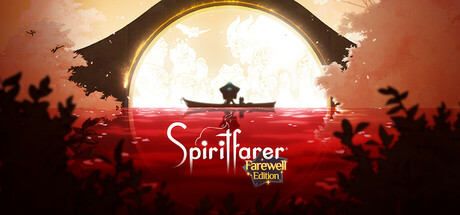
Spiritfarer is an aesthetically pleasing management sandbox style game created by Thunder Lotus Games. As captain of a ferry, Stella embarks on an adventure by helping trapped spirits reach the afterlife. The young woman must do so by building a boat accustomed to the needs of each and personally care for them. Indeed, the ferrymaster must cook, garden and socialize with her guests. In order to get the resources necessary for the upgrades of the boat, Stella must navigate to different islands and interact with a plethora of characters. On the islands, she will find spirits who will then follow her back to the boat.
Each spirit has a journey of their own that they must complete in order to leave for the afterlife. Furthermore, every spirit has its own preferences and a mood bar that shows how they are feeling. It is part of Stella’s job to keep that mood bar as high as possible. The spirits also have a respective mini game associated with them that allows the player to gain different resources for the builds.
Beside the gameplay, this game is particularly rich in its visual aesthetic. Indeed, depending on where one is navigating to, the horizon will change. For instance, when approaching an island, one slowly sees it behind the boat. Moreover, at times, what appears to be nighttime falls, the player realizes that it is in fact a solar eclipse happening. The visuals of it are astonishing and I surprised myself by taking a break from the gameplay to simply observe the stars in the sky while rocking to the peaceful music.
The music plays a major role in the enchantment of the game. The melody transports you into the game and creates a harmony within the gameplay.
Nonetheless, the repetitive tasks that must be done and the lack of clear destinations can be particularly distracting of the richness that this game can offer.
Overall, I recommend this game as it brings management games to a level I had never experienced before. Through the narratives that the spirits share, the player learns insightful morales and can allow one to reflect on their own experiences.
By Connie Guo
Spiritfarer, created by Thunder Lotus Games, is a satisfying game with elegantly designed stories and thought-provoking takeaway messages. You can play alone as the main character Stella, or as two people being Stella and Daffodil the cat, but one player is totally sufficient. Stella takes on the role of transporting spirits to afterlife. Throughout the game, Stella would invite spirits to her boat, interact with them with their backstories unfolding through conversations. It turns out that all the spirits knew Stella from the past. Eventually, Stella helped them get ready to move on to their final resting place. Overall, the narrative and gameplay feel smoothly merged.
The routine activities to perform are diverse and not operationally challenging, like fishing, collecting resources, cooking, gardening, building and upgrading boat, and navigating to new locations to pick up new spirits. The spirits are animals, and you will find that the game is big on creating memorable character designs and animal symbolism – the frog is funny, carefree, nature-loving and simple; while the deer is gentle, graceful, quiet, and has a more complex past. They also have different styles of coping, reconciliation and healing.
A novel and eye-catching design of Spiritfarer is its character mood checking interface. When you go into the character profile, there is a summary of what the character’s likes and dislikes are, a mood bar showing their overall emotional state, positive and negative events that were mood modifiers, and mood perks of what the character can bring when they are happy. This journaling form of mental health state portrayal is not only clear, but. Also generates a sense of achievement when you successfully uplift the characters’ mood.
Broadly, the game explores central themes of grief and loss, learning to say goodbye, healing, letting go, and leaving behind. Compassion, caregiving, beauty of simplicity and appreciation of everyday life are conveyed. Spiritfarer emphasizes that the focus should be on life’s journey, not just the destination. The game did a great job creating an immersive environment with unique art style and soothing music where you get to interact a lot with characters and delve into the emotional depth of personal paths. If I have to be critical, I would say the routine tasks can get repetitive and thus drag the pace to be relatively slow. And the interleaved storytelling of multiple characters, while rich and natural, can be challenging on player’s memory. However, this game is for sure one of its kind.